Translate the Blog

Wednesday, December 23, 2015

Supta Paschimottanasana (Lying Down Westward Yoga Pose)


Procedure for Supta Paschimottanasana (Lying Down Westward Yoga Pose):
  • While lying flat on the back take the knees to the chest.
  • Straighten them up and back holding behind the knees if you are not very flexible.
  • Roll slightly back so that the upper part of the shoulder blades touches the mat. Feel free to rock a little as long as it feels safe.
  • Push through the heels, toes and ballpoints of the toes.
  • Stretching through the heels will result in a much deeper stretch along the legs and back but extending through the toes stretches tibia muscles and the ankles. The legs also come down a little more creating more of an angle at the hips.
Advantages of Supta Paschimottanasana (Lying Down Westward Yoga Pose):
  • Can ease constipation.
  • This is a great hamstring and lower back stretch but it is also an ideal way to balance the positioning of the bones in the spine around the shoulders.
  • While in it rock slightly and you will feel and hear the vertebrae move into proper alignment.
  • Can help with the alignment and positioning of the spine.
  • This pose is part of a Yoga for Back Pain sequence.
  • May help with diabetes.
  • Helps relieve backache and headache.
  • Promoting Digestion
Therapeutics:
  • Diabetes
  • Gas trouble
  • Constipation
  • Backache
  • Weight Loss
  • Headache
  • Digestive disorders
  • Spinal Disorders
          
             Yoga Asanas on Sitting Positions


Monday, December 21, 2015

Pashchima Namaskarasana (Reverse Prayer Pose)

Paschim = west. In this context, it means backside; namaskar = greeting; asana = pose. Paschim Namaskarasana or the Reverse Prayer pose is an upper body strengthening pose that works specifically on the arms and the abdomen. It is also known as Viparita Namaskarasana.

Procedure for Pashchima Namaskarasana (Reverse Prayer Pose):
  • Begin in Tadasana pose.
  • Relax the shoulders and bend your knees a little.
  • Bring your arms behind your back and join the palms with fingertips facing downward.
  • As you inhale, turn the fingertips inwards towards the spine and bring them to face upwards.
  • Ensure that the knees are still slightly bent and the palms are pressed firmly against each other.
  • Stay in the position for a couple of breaths.
  • As you exhale, slowly turn the fingertips downward.
  • Bring the arms to the side of the body and slowly come back into Tadasana.

Advantages of Pashchima Namaskarasana (Reverse Prayer Pose):
  • Opens the abdomen, thus allowing deeper breaths.
  • Promoting Digestion
  • Strengthening Wrist Tendons
  • Strengthening Pectoral Muscles and Shoulder Joints
  • Stretches the upper back.
  • Relaxing Shoulder Blades
  • Stretches the shoulder joints and pectoral muscles.

Therapeutics:
  • Backache
  • Weight Loss
  • Digestive disorders
  • Gas trouble
  • Constipation

             
             Yoga Asanas on Sitting Positions

Friday, December 18, 2015

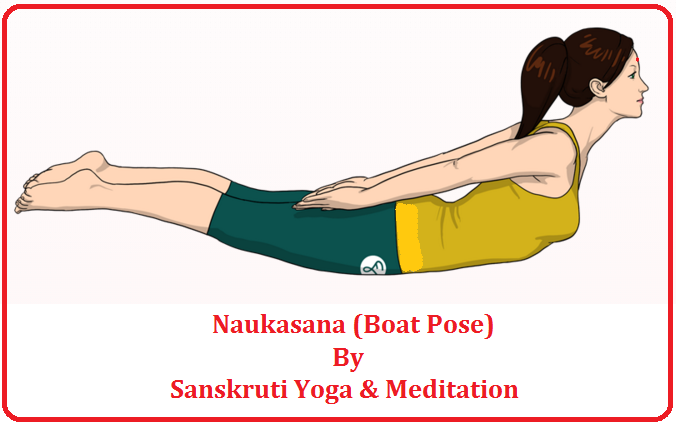
Naukasana (Boat Pose)

Naukasana, Boat Yoga Pose Benefits and StepsIn Sanskrit ‘Nauka’ means ‘Boat’ and ‘Asana’ means ‘Pose’. So this asana is called as Naukasana. While practicing boat pose you will see the entire body takes a shape of a boat.

Procedure for Naukasana (Boat Pose):
  • Lie down on the supine position (back).
  • Your feet should be together and stretched and your arms are besides of your legs.
  • Inhale raises your entire body at 30 degree so that you can see your toes with eyes.
  • Keep your palm on the thighs.
  • Remain in the pose as long as you can maintain. Initially, it may be 20 seconds, increases the time up to 2 minutes.
  • While maintaining the pose, feel the stretching on your navel area.
  • Bring your body down with deep exhale and relax.
  • Inhale –exhale slowly while maintaining the pose.

Advantages of Naukasana (Boat Pose);
  • Improves the blood circulation.
  • Good for developing six pack ABS.
  • Good for diabetes patient to maintain the sugar level.
  • Helps to reduce belly fat.
  • Improve the function of digestion.
  • Regulates the function of pancreas, liver and lungs.
  • Improves the function of kidney, thyroids and prostate glands.
  • Strengthens abdominal muscles.
  • Strengthens the muscles of thigh, hips, necks and shoulder.

Therapeutics:
  • Diabetes
  • Weight Loss
  • Digestive disorders
  • Backache
  • Hernia
  • Gas trouble
  • Constipation

Wednesday, December 16, 2015

Supta Urdhva Hastasana (Upward Salute Pose)


Procedure for Supta Urdhva Hastasana (Upward Salute Pose):
  • Urdhva Hastasana is a pose we practice a variation of unconsciously every morning: We roll out of bed, stand up—eyes half open, yawning—raise the arms, arch the spine, and take the head back.
  • It is an intuitive movement that helps get energy moving after a night’s sleep. When we encounter this pose for the first time in a yoga class, we often take it for granted.

Advantages of Supta Urdhva Hastasana (Upward Salute Pose):
  • The upward salute pose is known to be very effective in stretching the spine, armpits, belly, shoulders and overall body.
  • It is also known to be therapeutic in the treatment of congestion and asthma.
  • This asana removes the superfluous fat from the body making the body light.
  • It directs the ‘apanvayu’ downwards and out at the anus.
  • The upward salute pose also helps in reducing fatigue and anxiety and improves the overall digestion process
  • It has all the benefits of Paschimottanasana.
  • It rectifies any unevenness in length in the leg owing to the fracture of any bones either in the leg or the thigh.

Therapeutics:
  • Digestive disorders
  • Gas trouble
  • Weight Loss
  • Backache
  • Constipation
  • Backache
  • Anxiety
  • Rheumatism

Sunday, December 13, 2015

Benefits of Meditation

  • Vietnamese Buddhist Monk Thich Nhat Hanh clearly indicates, “Meditation is not to escape from society, but to come back to ourselves and see what is going on. Once there is seeing, there must be acting. With mindfulness, we know what to do and what not to do to help.”
  • Learning meditation means discovering a world in which we can help remove the negativity. We replace it with positive thoughts and actions. It's possible, through meditation, to achieve physical, mental, emotional and spiritual changes that enrich us, and all with whom we come into contact.

  • There are so many advantages to meditation. 

Mental (Psychological) Benefits of Meditation:
  • Improves rapid memory recall
  • Increases grey matter concentration in the brain
  • Builds self-confidence.
  • Increased brain wave coherence.
  • Acutely improves psychomotor vigilance, and may decrease sleep need
  • Improved learning ability and memory.
  • Increased ability to solve complex problems
  • Helps control own thoughts
  • Increases serotonin level, influences mood and behavior.
  • Able to see the larger picture in a given situation
  • Helps manage ADHD (Attention Deficit Hyperactivity Disorder)
  • Helps in quitting smoking, alcohol addiction
  • Increased feelings of vitality and rejuvenation.
  • Improves your focus, attention, and ability to work under stress
  • Develop will power
  • Helps make more accurate judgments
  • Resolve phobias & fears
  • Improves information processing and decision-making
  • Increased Productivity
  • Greater communication between the two brain hemispheres
  • React more quickly and more effectively to a stressful event.
  • Higher intelligence growth rate
  • Decrease in restless thinking
  • Increase in the capacity for intimate contact with loved ones
  • Decrease in potential mental illness
  • Reduces need and dependency on drugs, pills & pharmaceuticals
  • Require less time to fall asleep, helps cure insomnia
  • Increases sense of responsibility
  • Increases the ability to keep focus in spite of distractions
  • Increases listening skills and empathy

Physiological Benefits of Meditation:
  • Reduces risk of heart diseases and stroke
  • Increases exercise tolerance.
  • It lowers oxygen consumption.
  • It decreases respiratory rate.
  • Relieves pain better than morphine
  • Leads to a deeper level of physical relaxation.
  • Reduces risk of Alzheimer’s and premature death
  • It affects genes that control stress and immunity
  • Greater Orderliness of Brain Functioning
  • Decreases cellular-level inflammation
  • It may even help treat HIV
  • Decreases muscle tension
  • Helps with weight loss
  • Reduction of free radicals, less tissue damage
  • Good for people with high blood pressure.
  • Reduces anxiety attacks by lowering the levels of blood lactate.
  • Harmonizes our endocrine system
  • Helps in chronic diseases like allergies, arthritis etc.
  • Reduces activity of viruses and emotional distress
  • Reduces Pre-menstrual Syndrome symptoms.
  • It increases blood flow and slows the heart rate.
  • Decreases inflammatory disorders
  • Helps in post-operative healing.
  • Enhances the immune system.
  • Relaxes our nervous system
  • Helpful for patients diagnosed with Fibromyalgia
  • Decreases the aging process.
  • Higher skin resistance
  • Improved flow of air to the lungs resulting in easier breathing.
  • Drop in cholesterol levels, lowers risk of cardiovascular disease.
  • Prevented, slowed or controlled pain of chronic diseases
  • Cure headaches & migraines
  • It helps prevent asthma, rheumatoid arthritis and inflammatory bowel disease
  • Produce lasting beneficial changes in brain electrical activity
  • Helps in building sexual energy & desire
  • Cure infertility (the stresses of infertility can interfere with the release of hormones that regulate ovulation). 

Spiritual Benefits of Meditation:
  • Deeper Level of spiritual relaxation
  • Increases feelings of compassion and decreases worry
  • Growing wisdom
  • Provides peace of mind, happiness
  • Helps learn forgiveness
  • Loving-kindness meditation improves empathy and positive relationships
  • Experience a sense of “Oneness”
  • Helps you discover your purpose
  • Decreases feelings of loneliness
  • Increased self-actualization.
  • Helps keep things in perspective
  • Discovery of the power and consciousness beyond the ego
  • Deeper understanding of yourself and others
  • Brings body, mind, spirit in harmony
  • Changes attitude toward life
  • Creates a deeper relationship with your God
  • Attain enlightenment
  • Helps living in the present moment


Saturday, December 12, 2015

Introduction to Meditation

  • Rates of depression and anxiety are rising in the modern world.
  • Meditation is a practice where an individual trains the mind or induces a mode of consciousness, either to realize some benefit or for the mind to simply acknowledge its content without becoming identified with that content, or as an end in itself.
  • In the mindfulness of breathing meditation practice we use the breath as an object of awareness. We follow the physical sensations of the breath as it flows in and out of the body.
  • The rest in meditation is deeper than the deepest sleep that you can ever have. When the mind becomes free from agitation, is calm and serene and at peace, meditation happens.
  • This meditation practice isn’t a breathing exercise. We allow the breath to flow naturally and are simply aware of it. So there is no control over the breath.
  • The simple principle behind this meditation practice is that if we keep taking our awareness back to the breath — over and over again — then our mind gradually quiets down and we feel more contentment.
  • The term meditation refers to a broad variety of practices that includes techniques designed to promote relaxation, build internal energy or life force and develop compassion, love, patience, generosity and forgiveness.
  • Meditation is often used to clear the mind and ease many health concerns, such as high blood pressure, depression, and anxiety.
  • The benefits of meditation are manifold. It is an essential practice for mental hygiene. A calm mind, good concentration, clarity of perception, improvement in communication, blossoming of skills and talents, an unshakeable inner strength, healing, the ability to connect to an inner source of energy, relaxation, rejuvenation, and good luck are all natural results of meditating regularly.
  • Meditation may also involve repeating a mantra and closing the eyes. The mantra is chosen based on its suitability to the individual meditator.
  • Meditation has a calming effect and directs awareness inward until pure awareness is achieved, described as "being awake inside without being aware of anything except awareness itself."
  • In brief, there are dozens of specific styles of meditation practice, and many different types of activity commonly referred to as meditative practices.

Friday, December 11, 2015

Yogasana for Eyes: Nose Tip Gazing


  • Sit in a cross-legged pose.
  • Lift the right arm straight directly in front of the nose.
  • Making a fist with the right hand, keep your thumb pointing upward.
  • Focus both eyes on the tip of the thumb.
  • Now bend the arm and gradually bring the thumb to the tip of the nose, all the while having the eyes focused on the tip of the thumb.
  • Remain in this position for a while with the thumb held at the tip of the nose with the eyes focused there.
  • Continuing to gaze at the tip of the thumb, gradually straighten the arm.
  • This constitutes a single round.
  • Perform at least five such rounds.

        Palming

       Blinking

       Eye Rolling

       Sideways Viewing

       Up and Down Viewing

       Nose Tip Gazing

Yogasana for Eyes: Front and Sideways Viewing


  • Relax your body and breathe comfortably.
  • Hold one arm straight out in front of you in a loose fist, with the thumb pointing up.
  • Focus on your thumb.
  • While keeping your eyes trained on it, slowly move the thumb toward your nose until you can no longer focus clearly on it.
  • Pause for a breath or two, and then lengthen the arm back to its original outstretched position, while maintaining focus on the thumb.
  • Repeat up to 10 times.
  • Then close your eyes and rest.

        Palming

       Blinking

       Eye Rolling

       Sideways Viewing

       Up and Down Viewing

       Nose Tip Gazing

Thursday, December 10, 2015

Yogasana for Eyes: Up and Down Viewing


  • Sit with legs straight in front of your body.
  • With both the thumbs pointing upwards, place both the fists on the knees.
  • Slowly raise the right thumb keeping the arms straight. Follow the motion of the thumb upwards with the eyes.
  • When the thumb is raised to the maximum, gradually bring it down to the starting position and continue to keep the eyes focused on the thumb all the while keeping the head still.
  • Repeat the same process with the left thumb.
  • Practice this 5-7 times with each thumb.
  • The head and the spine should be kept straight throughout.
  • Close the eyes and relax.

         Palming

       Blinking

       Eye Rolling

       Sideways Viewing

       Up and Down Viewing

       Nose Tip Gazing

Yogasana for Eyes: Sideways Viewing


  • Sit with legs straight in front of the body.
  • Now lift the arms keeping your fist closed and your thumbs pointing upward.
  • Look at a point straight in front of you in level with your eyes.
  • Keep the head in this fixed position, focus on the following one after the other, by shifting your vision to the Space between the eyebrows Left thumb Space between the eyebrows Right thumb Space between the eyebrows Left thumb
  • Repeat this exercise 10 to 20 times.
  • After completing this exercise close your eyes and rest.

         Palming

       Blinking

       Eye Rolling

       Sideways Viewing

       Up and Down Viewing

       Nose Tip Gazing

Wednesday, December 9, 2015

Yogasana for Eyes: Eye Rolling


  • Sit upright with a long spine and relaxed breath.
  • Soften your gaze by relaxing the muscles in your eyes and face.
  • Without moving your head, direct your gaze up toward the ceiling.
  • Then slowly circle your eyes in a clockwise direction, tracing as large a circle as possible.
  • Gently focus on the objects in your periphery as you do this, and invite the movement to feel smooth and fluid.
  • Repeat three times, then close the eyes and relax.
  • When you’re ready, perform the same eye-rolling movement three times in a counterclockwise direction.

         Palming

       Blinking

       Eye Rolling

       Sideways Viewing

       Up and Down Viewing

       Nose Tip Gazing

Yogasana for Eyes: Blinking


  • Sit comfortably with your eyes open. Take some deep breaths to relax yourself completely.
  • Blink around 10-12 times very quickly.
  • Close your eyes and relax for 15-20 seconds. Slowly take your attention to your breath.
  • Repeat this exercise about 5-7 times.


         Palming

       Blinking

       Eye Rolling

       Sideways Viewing

       Up and Down Viewing

       Nose Tip Gazing

Tuesday, December 8, 2015

Yogasana for Eyes: Palming


  • Rub your hands together for 10 to 15 seconds until they feel warm and energized.
  • Then gently place your hands over your eyes, with the fingertips resting on the forehead, the palms over the eyes, and the heels of the hands resting on the cheeks.
  • Don’t touch the eyeballs directly, but hollow the hands slightly and allow them to form a curtain of darkness in front of the eyes.
  • Close your eyes, breathe deeply, and relax.
  • Envision the eyes absorbing the darkness like a sponge, while also welcoming healing warmth and energy from the hands. Invite the eyes to grow soft and spacious, and enjoy this break from visual stimulation.
  • Continue this palming action as long as it feels soothing—for just a few seconds or up to five minutes.
  • When you are ready to emerge, gently remove the hands from the face and slowly open the eyes.
  • This palming technique can also be done after the eye exercises that follow to further rest the eyes.
       
       Palming

       Blinking

       Eye Rolling

       Sideways Viewing

       Up and Down Viewing

       Nose Tip Gazing

Yogasana for Eyes